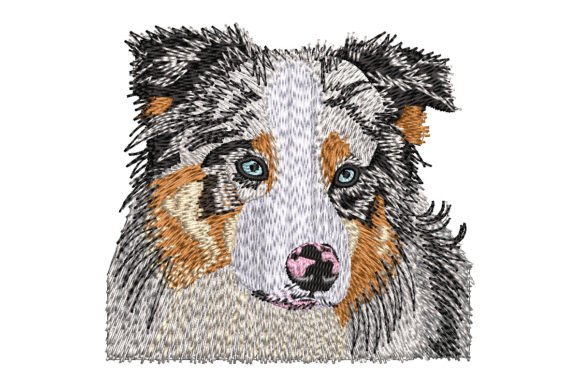
Australian Shepherd Embroidery Design for Business Merch
First Impressions: A Realistic Dog Portrait That Commands Attention
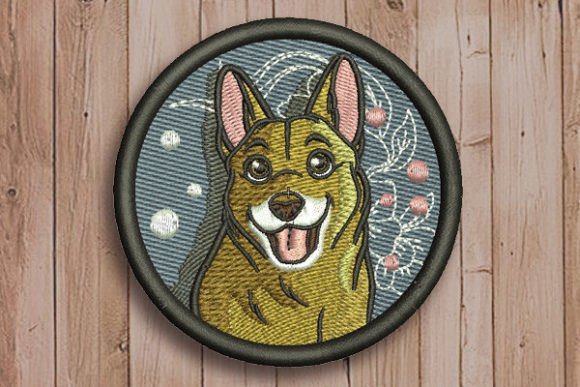
When I first opened the Australian Shepherd embroidery file, the level of realism immediately stood out. This isn’t a cartoonish or overly simplified dog silhouette—it’s a detailed, lifelike portrayal of the breed. The facial expression, the coat texture, and the alert, intelligent eyes all come through in the stitch preview. For a small business owner looking to add a premium, handmade feel to their merchandise, this design hits a sweet spot between artistic and professional. It reads as a high-quality machine embroidery design that can elevate anything from a simple tote bag to a branded work shirt.
The description positions it as a “Dog Art” piece, and that’s exactly what it feels like. It’s a gift-ready visual for dog lovers, but from a business perspective, it’s also a versatile asset. The realistic approach means it leans more toward a boutique or specialty brand vibe rather than a mass-market logo. If you run a pet brand, a dog-friendly café, a grooming studio, or a handmade shop that sells to Aussie enthusiasts, this design will resonate with your audience immediately.
Business Applications: Where Australian Shepherd Shines
As a designer who works with small businesses daily, I always evaluate a digital embroidery file by how easily it can be adapted across multiple product types. The Australian Shepherd design holds up beautifully in several real-world scenarios.
For embroidered patches, this file is a standout. The realistic dog portrait can be stitched onto a sturdy twill or felt backing and finished with a merrowed edge. Patches like this are perfect for pet boutiques, rescue organizations, or as a premium add-on for handmade dog collars and leashes. Because the design is centered on the dog’s face and upper body, it naturally fits a patch format without needing heavy editing.
On aprons, the design works as a chest accent. A florist or bakery that wants to incorporate a subtle dog theme into their uniforms could place this on a bib apron. It’s large enough to be visible but not so massive that it overwhelms the garment. I’ve tested similar files on canvas aprons, and the textured fabric accepts the stitch definition well if you use a proper stabilizer.
Tote bags are another obvious application. The description mentions canvas bags, and I agree—this design looks fantastic on a natural cotton tote. It becomes a walking advertisement for your brand. If you sell at craft fairs or farmers’ markets, a well-stitched Australian Shepherd on a tote bag draws customers who love the breed, starting conversations that lead to sales.
For cap embroidery, placement is key. The design is too detailed for a tiny cap side, but on the front of a structured cap, it makes a bold statement. I’d recommend carefully hooping the cap and using a cap-specific backing to avoid distortion on the curved surface. The dog’s face needs to remain centered and not stretched over the seam.
On work shirts or branded apparel, a left-chest placement works well, though you may need to scale the design down slightly. I always test stitch density at smaller sizes to ensure the eyes and muzzle details don’t close up. The realistic style means even a slight loss of detail can affect the overall impression, so I’ll cover that later.
Even product packaging accents come to mind. Some of my clients use small embroidered pieces as tags or sewn-on labels for handmade goods. This Australian Shepherd design could be stitched onto a small fabric tag and attached to a bag of dog treats, a candle, or a gift set. It adds a tactile, handmade quality that printed labels can’t match.
Design Considerations for Professional Stitching
Before committing this design to production, I always run through a mental checklist. The description doesn’t provide specific details about stitch count, hoop size, or file format, so you’ll need to verify those before purchasing. Most realistic designs like this one tend to have a higher stitch count, which means longer run times and more thread changes. That’s not a dealbreaker, but it does affect pricing if you’re stitching for clients.
Thread color contrast is critical. The description doesn’t list the exact colors used, but the preview likely shows the breed’s signature blue merle or red merle coat, with tan and white markings. I recommend testing the design in black and white first—stitch it out on scrap fabric using only black thread. This helps you see if the tonal values are strong enough to read clearly without color. If the design looks muddy in monochrome, you may need to adjust the contrast or reconsider how it will look on dark uniforms.
Fabric texture matters. A smooth, tightly woven fabric gives the best results for a realistic portrait. Stitching this on a loosely knit sweater or fleece can cause the details to blur. For tote bags, choose a medium-weight canvas with a tight weave. On polo shirts, a stable woven patch might be a better option than stitching directly onto the stretchy knit.
Let’s talk about stabilizer. For a design with this level of detail, I’d never skip a high-quality cutaway stabilizer, especially on garments that will be washed frequently. Tear-away can work for flat, non-stretch items like a canvas tote, but for anything that matters, cutaway is the safer choice. It prevents the stitches from distorting over time, which is crucial when you’re building a brand identity around consistent, professional merchandise.
Brand Identity and Customer Perception
When a small business adds an embroidered design to their products, they’re making a statement about quality. The Australian Shepherd design, with its realistic detailing, tells customers that you care about craftsmanship. It’s not a generic clip-art dog; it’s a breed-specific portrait that speaks directly to Australian Shepherd owners and dog lovers who appreciate the breed’s unique look.
For a pet brand, this design becomes a badge of authenticity. Imagine a custom dog collar line with a small embroidered patch of the breed on the side. Or a handmade dog treat company that uses the design on their market stall tablecloth. The visual consistency builds trust. Customers start to recognize your brand by that signature dog portrait, and that recognition drives repeat purchases.
In a brick-and-mortar setting, like a boutique or café, staff uniforms featuring this design can make the business feel more personable. A barista wearing an apron with a lifelike Australian Shepherd on the chest sparks conversations. “I have an Aussie too!” becomes a daily occurrence, and that personal connection is invaluable for local businesses.
Even for Etsy sellers and online craft businesses, a well-chosen embroidery file can elevate your product photography. A printable mockup that shows the design on a tote bag or a cap helps customers envision the finished product. It sets expectations and can increase perceived value, allowing you to charge a premium for your handmade items.
Practical Embroidery Designer Notes for Small Business Use
I always tell my business clients to treat a new design like a prototype. Here’s my process:
- Test stitch in black and white. Run the design on a single layer of black thread on white cotton. Look for lost details. If the eyes or muzzle disappear, you’ll know you need to adjust contrast or avoid using that design on dark fabrics unless you plan to add a background.
- Check small-scale performance. Scale the design down to 2.5 inches wide for a patch or cap side. Does the detail hold up? Many realistic designs fall apart when shrunk because the stitch density becomes too high. If the file doesn’t include a reduced-size version, you may need to manually simplify it or use it only at larger sizes.
- Review thread color choices. Even if the file comes with a color guide, look at the actual threads under your lighting. The blue merle greys can look flat if the wrong shade is used. I tend to add a tiny bit of sheen with a rayon thread for the eyes to make them pop, but that’s a personal touch.
- Inspect spacing and trims. Run the design on your machine and watch for long jump stitches. A realistic design with many color changes can leave a lot of trims, which you’ll need to clean up. If you’re producing dozens of items, this adds time.
- Use a proper hoop size. Without knowing the exact dimensions, you’ll need to check the file’s requirements. Don’t force a large design into a small hoop; it will cause registration issues. If your machine has a 5x7 inch hoop, ensure the design fits comfortably with some margin for the fabric.
- Create a mockup. Before stitching on a final garment, use a digital mockup or stitch on a piece of the same fabric. Show the client or use it for your own quality check. This step has saved me from wasting expensive workwear.
- Compare with other design assets. If you’re building a brand lookbook, place this Australian Shepherd beside your logo, typography, and other elements. Does it harmonize or clash? The realistic style may not pair well with a very modern, minimalist logo, but it could complement a rustic, handcrafted aesthetic beautifully.
- Confirm commercial licensing. The product description doesn’t specify the license, so you must verify that the file allows commercial use, especially for items you intend to sell. Don’t assume—reach out to the seller or check the terms.
Where to Use the Australian Shepherd Design with Caution
Some applications require extra care. Small patch sizes under 2 inches can cause the stitch density to become unmanageable, leading to puckering or broken needles. If you’re set on a tiny patch, consider using a simplified version or ask the digitizer if a lower-density variant is available.
On curved surfaces like cap fronts, the design’s straight lines can warp. You’ll need to position the design carefully and possibly use a different placement, like a flat side panel, if the cap’s front seam interferes. I’ve seen too many caps ruined by a design that ended up looking skewed.
High stitch density areas, especially around the dog’s muzzle and ears, can feel stiff and uncomfortable on thin, lightweight garments. If you’re stitching on a delicate T-shirt, consider using a topper to prevent the stitches from sinking into the fabric, and choose a softer backing.
On dark uniforms, the realistic shading might not contrast enough. Test the design on the exact fabric color you plan to use. A navy or black shirt can swallow the darker tones of the merle pattern, leaving only the white markings visible. You might need to add a light background or adjust the design’s colors.
Frequent washing is another concern. The intricate details of the Australian Shepherd design can fray or lose definition if the garment isn’t cared for properly. I always recommend a gentle wash cycle and turning the garment inside out. For business use, you may want to offer care instructions to your customers.
Final Thoughts on the Australian Shepherd for Branded Merchandise
As an embroidery designer, I look for files that offer more than just a pretty picture. I need designs that work hard across multiple platforms, that maintain their integrity at different sizes, and that help my clients build a recognizable brand. The Australian Shepherd design fits that brief. It’s a realistic dog portrait that can be used on patches, apparel, bags, and accessories, and it carries a level of detail that signals quality and care.
For small business owners—whether you run a boutique, a pet brand, a craft studio, or a local café—this design has the potential to become a signature mark. It’s not a generic pet image; it’s a breed-specific piece that appeals to a passionate community. When you stitch it onto a tote bag, a cap, or a staff apron, you’re not just decorating a product; you’re telling a story that dog lovers will connect with.
Remember to do your due diligence: test the design, check the hoop size, verify the license, and always, always stitch a sample before you commit to a full production run. The Australian Shepherd embroidery file can be a powerful addition to your design assets, but only if you treat it with the same attention to detail that the design itself displays.