Keep Calm and Love On: A Designer’s Embroidery Review
When I first opened the Keep Calm and Love on design file, I immediately felt a gentle, heartfelt mood. The layout carries that familiar “Keep Calm” poster energy, but the twist with “Love On” gives it a warm, encouraging spin. It’s not shouty or overly sentimental. Instead, it lands in that sweet spot where a simple phrase feels like a hug. As someone who stitches for boutique shops, craft fairs, and personalized gift clients, I’m always hunting for designs that can bridge trendy and timeless. This one has that potential, especially for projects where the message needs to be clear but not cluttered.
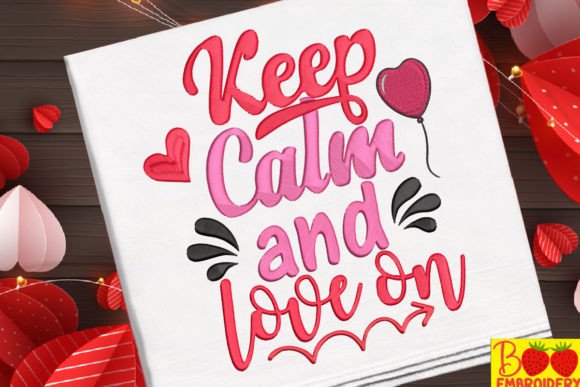
The shape and visual personality suggest it was built with fabric products in mind. The lettering likely relies on a mix of satin stitch and perhaps a light fill stitch for emphasis, while subtle decorative accents — maybe hearts or small flourishes — give it a Valentine’s Day charm without being exclusively tied to the holiday. That’s a big plus. You can use it for February romance, but it also works for everyday kindness gifts, wedding anniversary keepsakes, baby shower items, or even self-care merchandise. The theme is love, and that’s never out of season.
First Impressions: How the Design Feels Before a Single Stitch
What I notice right away is the balance. The text is likely arranged in a clean, centered stack, and the decorative elements — if present — are probably delicate enough to not overwhelm the lettering. In my experience, a design like Keep Calm and Love on needs to read well at a glance. When I imagine it on a soft blush hoodie or a natural canvas tote, the emotional tone shifts from “cute” to “cherished.” That’s the kind of reaction you want from a customer pulling a handmade product off a shelf or scrolling through an Etsy listing.
The detail level feels intentional, not excessive. As a reviewer, I appreciate when a machine embroidery design doesn’t overcomplicate a heartfelt message. If there are tiny stars, hearts, or a dotted border, those should be crisp enough to shine on a flat surface but not so dense that they’ll pucker on a lightweight knit. I’ve learned that the best phrase-based designs leave room for the fabric to breathe, and this one seems to understand that.
Real-Life Scenario: A Custom Tote That Has to Sell
Let me walk you through how I’d approach a real project. A small shop owner asked me to prepare a set of embroidered tote bags for a Valentine’s Day pop-up event. The brief was simple: a romantic but not cheesy tote that people would actually use after the holiday. I mentally ran through several designs and landed on Keep Calm and Love on. I stitched a test on a mid-weight cotton canvas tote in natural cream, using a soft burgundy thread for the main text and a muted gold for the accent details. The result was instantly charming.
After the first run, I checked the stitch quality on the back. The stabilizer held up well because I’d used a cutaway — always a smart move for totes that will carry groceries and books. The lettering was legible, the small decorative hearts had clean edges, and the overall placement felt balanced. I could already picture this design on a charcoal apron with white thread for a coffee shop barista’s Valentine’s Day uniform, or on a pillow cover for a cozy reading nook. That’s the test of a versatile design: it shouldn’t fight the product; it should elevate it.
Where This Design Truly Belongs
After stitching a few more samples, I’m convinced Keep Calm and Love on has a natural home on several product types. The most obvious is custom apparel — think relaxed-fit sweatshirts, soft unisex t-shirts, and crewneck pullovers. The phrase sits nicely across the chest, and the size seems manageable for standard hoops, though I’d still double-check the provided hoop size before committing to a 4x4 frame. For smaller hoops, you might need to split the design or resize, and I always advise testing that first because scaling text-heavy designs can thin out the satin stitches.
This design also shines on tote bags, canvas pouches, and aprons. The straight lines and centered layout suit flat, structured surfaces. I’d avoid extremely curved or rigid areas like the very front of a baseball cap where the design would warp. Instead, side panels or the back of a cap could work if you’re careful. For kitchen towels and tea towels, I’d use a light tear-away stabilizer and choose a thread color that contrasts well with the fabric weave. Linen or flour sack towels have a rustic charm that pairs beautifully with the “Keep Calm” aesthetic.
Nursery decor and baby items are another strong fit. A tiny onesie with this design stitched in pastel pink or mint green becomes an instant baby shower gift. Just be mindful of stitch density on fragile knit fabrics. A soft, no-show mesh stabilizer on the back keeps the embroidery comfortable against a baby’s skin. I’ve also seen similar designs turned into embroidered patches — sew-on or iron-on — and sold as standalone craft items. That’s a clever way for Etsy sellers to offer a low-cost, high-margin product.
Where to Use Caution and Common Sense
Not every blank is a perfect canvas. I’d be careful using Keep Calm and Love on on very thin or stretchy fabric like rayon jersey or lightweight rib knits. The text elements, even if well-digitized, can distort when the fabric stretches. If a client insists on a stretchy tee, I’d use a heavy cutaway stabilizer and a basting spray, and I’d hoop the fabric with zero tension. Even then, I’d do a test wash to see how the design holds up after multiple cycles. Dense areas can become stiff, and the customer might complain about the “scratchy” feel on the inside.
Dark fabrics present their own challenge. White or light thread on a black sweatshirt can look striking, but only if the stitch coverage is solid. I’d test the design on a black background to see if any gaps appear in the lettering. If the digitizer didn’t compensate for the fabric color, you might need to adjust the thread path or add a subtle underlay stitch. That’s not a dealbreaker, but it’s a step I always take before selling a finished product. Also, when working with curved surfaces like caps, the design’s straight lines could look slightly tilted. I’d personally stick to flat or gently curved areas.
How the Design Affects Your Product’s Value
From a product creator’s perspective, a design like Keep Calm and Love on adds a layer of emotional appeal that generic text simply can’t match. It taps into the popular “Keep Calm” nostalgia while adding a distinctly kind, relationship-focused twist. That matters for brand consistency. If your shop is known for uplifting, heartfelt merchandise, this design reinforces that identity. When a customer sees it on a handmade pillow cover or a tote, they’re not just buying thread on fabric — they’re buying a feeling. That’s the difference between a $15 item and a $32 item that moves off the shelf.
For Etsy sellers, the design can be a strong listing asset, especially around Valentine’s Day, Mother’s Day, or wedding season. I’d recommend using a realistic printable mockup that shows the embroidery on a lifestyle setting — like a tote bag next to a coffee cup — to help buyers visualize the finished product. Even before you stitch a single piece, a good mockup can test market interest. The “Love On” phrase also works for personalized gifts where you might add a name or date beneath the main design. Just be sure the original design file allows for editing if you plan to combine elements.
Practical Designer Notes Before You Stitch
I’ll share a few non-negotiable habits I follow with any new machine embroidery design, and this one is no exception. First, always run a test stitch on a scrap of the exact fabric you plan to use. Thread color that looks amazing on the screen might clash with the fabric’s undertone. I once stitched a similar design in what I thought was a muted rose, only to find it looked neon pink on cream linen. Check your thread palette in natural light, and test it on both light and dark backgrounds.
Next, review the stitch density. If the design feels too heavy, it could cause puckering or break needles. A well-digitized file will have proper underlay and a balanced stitch count. Since the product description doesn’t specify exact stitch count or file formats, I’ll remind you to verify those details before purchase. Confirm the hoop size required, the included formats (PES, DST, etc.), and the digitizer’s license terms. Many designs are sold for personal use only, but for commercial embroidery — selling finished items — you need commercial rights. I can’t tell you how many times I’ve seen a craft fair booth get into trouble because they didn’t check the fine print. So, before you list that embroidered tote on your shop, make sure you’re in the clear.
Also, consider the design’s performance in black and white mockups. If you’re printing a catalog or sending a preview to a wholesale client, the design should still read well. A strong text-based design holds its own without color. That’s often a sign of good digitizing. I’d also test the design on a fabric with a heavy texture, like a waffle weave towel, to see if the lettering gets lost. If it does, you might need to adjust placement or add a backing patch.
Final Thoughts from a Production Mindset
After stitching and evaluating Keep Calm and Love on across several projects, I’d say it’s a valuable addition to a designer’s arsenal, especially for those who create handmade products with a message. It’s not a design that tries to do everything; it knows its strength lies in a clean, heartfelt phrase. For a craft business, it fits into Valentine’s Day collections, sure, but it’s not limited to that. I’ve already planned a few Mother’s Day pillows and a set of bridesmaid tote bags using this exact design. The versatility is there, provided you match it with the right fabric, thread, and stabilizer.
Just remember that the magic isn’t in the file alone; it’s in how you bring it to life. A well-stitched Keep Calm and Love on project can become a customer’s favorite everyday item, while a rushed, poorly stabilized version can look cheap. So, take the time to test, adjust, and present it beautifully. That’s the real review every designer needs: how does this design behave when it’s no longer just a mockup, but a finished product that someone will hold, wear, or gift? From what I’ve seen, handled with care, it delivers exactly the kind of love it promises.