Baking Christmas Cheer: A Craft Fair Embroidery Review
When I first unzipped the folder for Baking Christmas Cheer, I was already picturing my booth table at the local holiday market. This machine embroidery design arrived with a promise of festive warmth, and after a few test stitch-outs, I’m ready to share my honest, production-focused thoughts. If you’re an Etsy seller, a small shop owner, or a maker prepping for a weekend craft fair, you’ll want to know exactly how this design performs on real products—and whether it’s worth the thread and time.
First Impressions: The Vibe of Baking Christmas Cheer
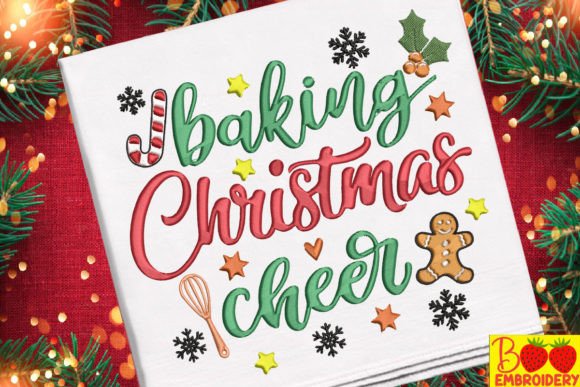
Right away, Baking Christmas Cheer feels like a heritage recipe card come to life. The title suggests a blend of cozy kitchen nostalgia and Christmas sparkle. I’d describe the mood as rustic farmhouse with a hint of modern whimsy. It’s not overly cutesy, nor is it starkly minimal. The visual balance likely sits somewhere between a decorative bakery sign and a cheerful holiday greeting. That’s precisely the kind of look that stops shoppers in a craft fair aisle—it’s familiar, inviting, and instantly connects to the idea of homemade gifts.
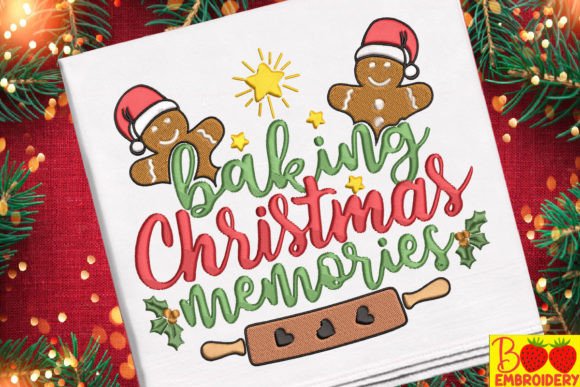
From a designer’s perspective, the name “Baking Christmas Cheer” hints at imagery like rolling pins, gingerbread, stars, or maybe a steaming mug. Even without seeing the exact stitches, the theme alone tells me this design was built for kitchen textiles and giftable home decor. It’s a safe bet for anyone who wants their finished product to feel handmade, premium, and seasonally relevant without being too trendy.
Where This Design Shines in a Craft Fair Booth
After evaluating the product description—“looks nice on clothes, home decor, or Christmas gifts”—I’m convinced the sweet spot for Baking Christmas Cheer is on flat, medium-weight fabric surfaces. The design’s character comes through best when it can be the quiet star of a practical item. Here’s how I’d map it to specific craft fair products.
Tea Towel Embroidery and Kitchen Linens
If I could only pick one product to showcase, it would be a high-quality flour sack tea towel. The baking theme is a natural fit for kitchen linens, and customers often buy these as hostess gifts or stocking stuffers. Using a machine embroidery design on a tea towel does require careful stabilizer choice—I always use a cutaway stabilizer with a water-soluble topper for any textured fabric. Baking Christmas Cheer likely includes small lettering or delicate details, so testing on a scrap of the exact towel fabric is non-negotiable. A dense stitch area on a loose weave will pucker, and nobody wants that on a finished product. When done right, a tea towel with this design becomes a display piece that practically sells itself.
Apron Embroidery and Giftable Apparel
An apron offers a large, smooth canvas for the design. I’d position Baking Christmas Cheer across the chest or on a generous pocket. The key concern here is stitch density: if the design has many tiny elements, the apron fabric might feel stiff or pull uncomfortably when worn. I always check the digitizing by running a test on a similar weight cotton canvas. For craft fair product value, a well-embroidered apron with a festive baking motif can command a higher price point than a generic print. It reads as a handmade product with personality, perfect for the buyer who loves to bake and wants to feel festive while doing it.
Tote Bags and Market Bags
Sturdy canvas tote bags are another top seller. This design works as a bold focal point on the front of a bag, especially when paired with contrasting thread colors. I’ve noticed that shoppers often pick up a tote bag, hold it at arm’s length, and react to the overall visual impact. Baking Christmas Cheer has the kind of clear, cheerful presence that photographs beautifully for online listings and grabs attention in a crowded booth. If you’re an Etsy seller, having a finished tote bag design in your product photos is a powerful way to show scale and versatility.
Embroidered Patches and Small Accents
If the embroidery file includes a smaller size, I’d test it as an embroidered patch. Patches make adorable stocking stuffers or gift toppers. However, tiny details and lettering can close up quickly, especially on dark fabric. I’d use a light thread for the main text and back the patch with a stiff felt to keep the shape. For a small shop product, patches are quick to produce in batches, but only if the design scales down cleanly. Always check the smallest included hoop size before committing to a patch run.
Pillow Covers and Home Decor
A simple linen pillow cover becomes a seasonal statement piece with this design. The key is to keep the fabric light or neutral—cream, natural, or soft gray—so the thread colors pop. Baking Christmas Cheer on a pillow cover sells the idea of a cozy, decorated home, and customers often buy multiples for themselves or as gifts. For booth display strength, I’d stack a few pillows with different designs, using this one as the warm, inviting anchor.
Production Practicalities: What You Need to Know Before You Stitch
As a professional embroidery designer, I never trust a digital embroidery file without a thorough test. The description mentions “multiple embro,” which I interpret as multiple sizes or format options—a huge plus for flexibility. But before you start mass-producing for a craft fair, run through these checks.
Stitch Density and Tiny Details
Designs with festive lettering or intricate baking motifs can hide dense stitch areas. On a towel, that density might cause puckering. On an apron, it could make the fabric stand stiffly away from the body. I always examine the back of the test stitch-out: if it feels like a solid plate, consider using a lighter weight thread or asking the digitizer about density adjustments. Small lettering in “Baking Christmas Cheer” might disappear on a dark or textured fabric, so test on both light and dark backgrounds. A contrast check is essential.
Thread Colors and Fabric Contrast
Traditional Christmas reds, greens, and whites are a safe bet, but I like to experiment with one or two subtle shifts. A soft gold instead of bright yellow, or a muted cranberry instead of pure red, can elevate the design from “generic holiday” to “artisan craft.” The thread colors you choose directly affect the perceived value of the finished product. For a craft fair, I’d stitch a sample on a few different fabric colors—natural linen, white cotton, and a light chambray—to see which combination sells the mood best.
Hoop Size and File Format
Before you start, confirm the exact hoop size required for each design version. The description doesn’t spell out specific dimensions, so I’d load the file into my embroidery software and check the stitch count and dimensions. If the largest size fits a 5x7 or 6x10 hoop, you’re in good shape for most home machines and commercial single-head setups. The “multiple embro” promise likely means you’ll have options for standard hoops, which is a huge advantage for batch production.
Stabilizer and Fabric Texture
For tea towels and textured linens, I pair a medium-weight cutaway stabilizer with a water-soluble topper. On canvas totes, a tear-away works if the design isn’t overly dense. For aprons, I’d fuse a lightweight interfacing before hooping to prevent shifting. The right stabilizer can make or break a professional-looking craft fair product. If you skip this step, no amount of festive charm will save a puckered, uneven stitch-out.
Visual Appeal and Customer Engagement
In a real booth, Baking Christmas Cheer has a distinct advantage: it creates an emotional hook. Baking is a cherished holiday tradition, and the design taps into that warmth. When a customer sees the design on a tea towel or apron, they’re not just looking at an embroidery—they’re imagining themselves in a cozy kitchen, pulling a tray of cookies out of the oven. That emotional connection is what transforms a browser into a buyer.
Photography and Etsy Listings
For small shop owners and Etsy sellers, this design is a photography dream. A flat lay with a rolling pin, some flour dusted on the counter, and a sprig of rosemary makes a compelling hero image. The words “Baking Christmas Cheer” are clear and keyword-rich, which helps in search. I’d create a printable mockup using the design assets to show the product in a lifestyle setting before I even stitch a single sample. That way, I can gauge interest and adjust colorways.
Brand Consistency and Booth Display
If your brand leans toward farmhouse, rustic, or heritage style, this design fits seamlessly. It’s not edgy or modern, so it won’t clash with a cohesive booth display. I’d group it with other kitchen-themed embroidery designs—maybe a gingerbread house or a simple “Joy” script—to create a curated feel. The consistency builds trust and makes the entire table look more intentional.
Careful-Use Notes for Embroidery Crafters
Despite the design’s appeal, there are a few pitfalls to watch out for. I’ve learned these the hard way, and I’d rather you avoid the same mistakes.
- Curved surfaces: This design is likely not ideal for caps. The combination of lettering and potential baking motifs will warp on a curved brim. Stick to flat surfaces.
- Small lettering: If the design includes the phrase “Baking Christmas Cheer,” tiny text might close up on textured towels or dark fabric. Test at the intended size before committing.
- Thick fabric: On heavy canvas, ensure your needle is sharp and your machine can handle the thickness. A dense design on thick fabric can cause skipped stitches.
- Dark fabric: If you plan to stitch on a dark background, you may need to increase the underlay or use a light thread underlay to prevent the fabric from showing through.
- Batch repetition: For a craft fair, you’ll need to produce multiple identical items. If the design has a high stitch count, factor in the extra time and thread cost. A 15-minute stitch-out on six towels adds up fast.
Final Verdict: Is Baking Christmas Cheer Ready for Your Booth?
After evaluating the theme, the product description, and the practical production points, I’d say Baking Christmas Cheer is a strong contender for any holiday craft fair or handmade market. It hits the sweet spot between festive and functional, and it’s uniquely suited to kitchen textiles that customers love to buy on impulse. The design’s warm, inviting character makes it a conversation starter, and the “multiple embro” promise gives you flexibility to scale it across different products.
That said, success depends on your diligence. Before you fill your booth with finished products, test the design on scrap fabric with the exact stabilizer and thread you’ll use. Check the stitch density, verify the hoop size, and create at least one real mockup to see how it photographs. Compare fabric colors and make sure the thread contrast reads well from a few feet away. Most importantly, confirm the commercial embroidery licensing terms. The description doesn’t spell out usage rights, so if you plan to sell finished items, reach out to the digitizer to ensure you’re covered. A craft fair booth is a business, and protecting yourself legally is just as important as choosing a beautiful design.
If you’re an Etsy seller, a boutique maker, or a creative entrepreneur looking for a reliable Christmas embroidery design that sells, Baking Christmas Cheer deserves a spot in your stitch library. It’s a design that feels like a warm kitchen hug—and that’s exactly what customers want when they’re buying handmade gifts.